

 See My Latest Article on HelloNation
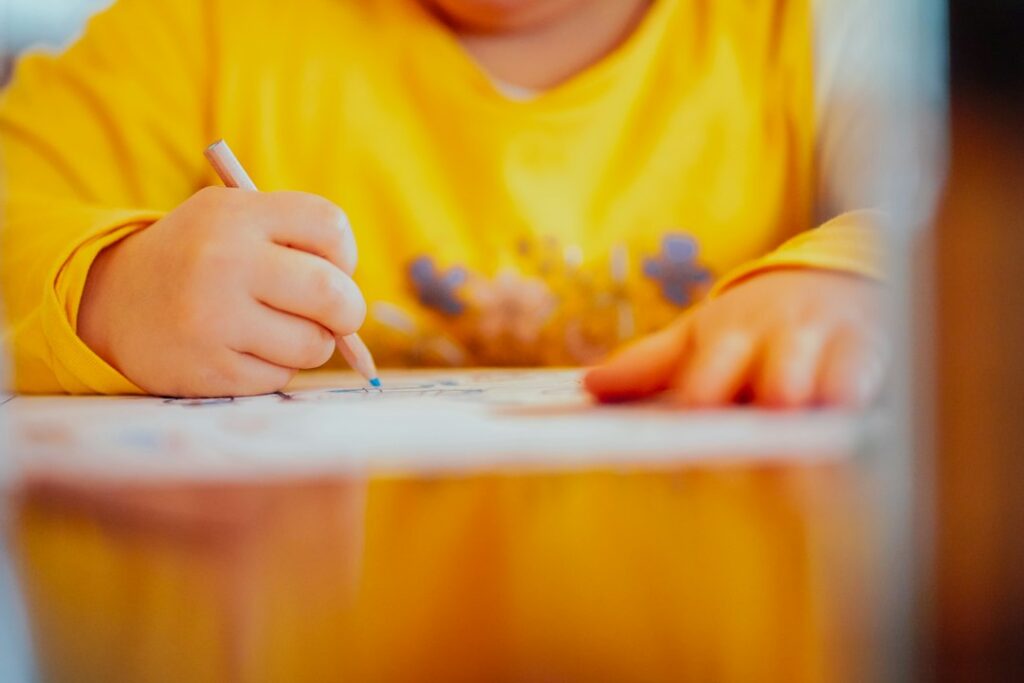
Fine motor skills help children use the small muscles in their hands, fingers, wrists, and forearms. These skills support everyday activities such as feeding, dressing, drawing, turning pages, using scissors, and eventually writing.
For families in Amherst, OH, fine motor practice can fit naturally into home routines, indoor play during cold or rainy weather, and outdoor activities during warmer months. Children do not need expensive equipment or formal lessons. Regular opportunities to grasp, pinch, move, stack, twist, and create are usually enough to build strength and coordination over time.
What are fine motor skills?
Fine motor skills are the controlled movements children make with the smaller muscles of the body, especially the hands and fingers. These movements require coordination between the eyes and hands, often called hand-eye coordination.
Examples include:
- Picking up small objects using the thumb and fingertip
- Turning a page without tearing it
- Holding a crayon or pencil
- Using a spoon, fork, or open cup
- Fastening buttons, zippers, and snaps
- Building with blocks
- Cutting paper with child-safe scissors
- Completing puzzles
- Opening containers and twisting lids
Fine motor development is different from gross motor development, which involves larger movements such as running, climbing, jumping, and throwing. Both areas develop together. A child who builds core strength and shoulder stability through active play may find it easier to control the hands and fingers during table activities.
Why do fine motor skills matter?
Fine motor skills support independence, learning, communication, and participation in daily life. Before children can form letters, they need the hand strength, finger control, and visual coordination required to manage a writing tool.
These skills also help children:
- Feed themselves with less assistance
- Put on and remove clothing
- Manage personal care tasks
- Use classroom materials
- Explore art and sensory activities
- Complete simple household responsibilities
- Express ideas through drawing, building, and making
A child does not need perfect handwriting or advanced cutting skills at an early age. Development occurs gradually, and children often show progress in one area while still needing help in another.
What activities build fine motor skills at home?
The most useful activities are enjoyable, repeatable, and matched to a child’s current ability. Adult supervision is needed for activities involving small objects, scissors, or materials that could be placed in the mouth.
Drawing, coloring, and painting
Offer thick crayons, washable markers, chalk, paintbrushes, or short pieces of crayon. Different tools encourage children to use their fingers and hands in varied ways.
Drawing on an easel, wall-mounted paper, or a large sheet on the floor can also support shoulder and arm stability. Children who are not interested in coloring may prefer making roads, maps, faces, pretend menus, or simple marks connected to play.
Playdough and household dough activities
Squeezing, rolling, pinching, flattening, and poking dough strengthen the hands while encouraging creativity. Children can make pretend food, letters, animals, or shapes.
For additional practice, hide large beads, craft sticks, or other safe, age-appropriate objects in the dough for the child to find. Check materials carefully and avoid small pieces with children who still mouth objects.
Building and taking apart
Blocks, interlocking construction materials, cardboard boxes, and recycled containers provide opportunities to grasp, align, press, stack, and pull apart. Building activities also develop planning and problem-solving.
A child may enjoy a simple challenge such as building a bridge for toy animals or making a tower that is taller than a nearby object. The goal is not the finished structure; it is the repeated hand practice involved in creating it.
Kitchen and household tasks
Many ordinary chores strengthen fine motor control. Children can:
- Tear lettuce or soft foods
- Stir batter
- Pour from a small container
- Use a rolling pin with help
- Wash plastic dishes
- Open and close food containers
- Sort socks or match lids with containers
- Use tongs to move larger objects

These tasks also build practical independence. Select activities that are safe for the child’s age and ability, and supervise near heat, sharp tools, or breakable items.
Fasteners and dressing practice
Buttons, zippers, snaps, buckles, and shoe fasteners provide meaningful hand practice. Allow extra time for children to try dressing themselves rather than completing every step for them.
A dressing board is not necessary. An old shirt, coat, backpack, or pair of shoes can provide real practice. Demonstrate one step at a time and offer help only where needed.
Puzzles, peg activities, and sorting
Large-piece puzzles, simple board games, pegboards, and sorting activities help children practice grasping, rotating, placing, and releasing objects. Sorting can involve household items such as large lids, socks, plastic utensils, or toy animals.
Use categories that make sense to the child, such as color, size, shape, or function. The activity can become more challenging as the child gains control.
How can families support skills without creating pressure?
Children learn best when practice feels purposeful and manageable. Short activities repeated several times a week are usually more effective than long sessions that leave a child frustrated.
Helpful strategies include:
- Start with materials that are easy to grasp.
- Offer two or three choices rather than many items at once.
- Let the child choose the design, color, or goal.
- Demonstrate slowly without taking over.
- Give the child enough time to attempt a task.
- Adjust the activity if it is too easy or too difficult.
- Praise effort, persistence, and problem-solving rather than speed.
Some children avoid drawing, cutting, or other table activities because the tasks feel difficult. Active play, sensory materials, and household jobs may be more comfortable starting points.
Does screen time affect fine motor development?
Screens are not the only factor that affects fine motor development, but extended sedentary screen use can reduce the time available for hands-on play. Touching a screen involves finger movement, but it does not provide the same range of grasping, pressing, twisting, cutting, drawing, building, and manipulating physical objects.
A balanced routine includes opportunities for movement, conversation, pretend play, books, outdoor exploration, and hands-on tasks. During colder months, simple indoor stations can help maintain variety: a drawing area, a building area, a puzzle basket, and a supervised kitchen or sorting activity.
What if a child struggles with fine motor activities?
A child may need additional support if fine motor tasks consistently cause distress, are much harder than expected for the child’s age, or interfere with eating, dressing, playing, or participating in early learning. Other signs may include avoiding both hands, frequently dropping objects, using an unusually tight or loose grip, or showing a marked difference between the two hands.
Development varies, so one difficult activity does not necessarily indicate a problem. Share specific observations with the child’s pediatrician or early childhood educator if concerns continue. They can help determine whether the child may benefit from further developmental screening or an evaluation by an appropriate specialist.
At home, continue offering low-pressure practice and notice what the child can do successfully. Fine motor growth is built through repeated, meaningful experiences rather than perfection in a single activity.