
 See My Latest Article on HelloNation
Play is not separate from learning in early childhood. For young children, play is one of the main ways they develop language, problem-solving skills, physical coordination, self-control, and relationships. In Amherst, OH, families can support this kind of learning through simple activities at home, outdoors, and in everyday routines.
What is play-based learning?
Play-based learning is an approach in which children explore ideas, practice skills, and make meaning through play. Adults may provide materials, ask questions, or introduce new vocabulary, but children usually have an active role in choosing what to do and how to do it.
Play can be:
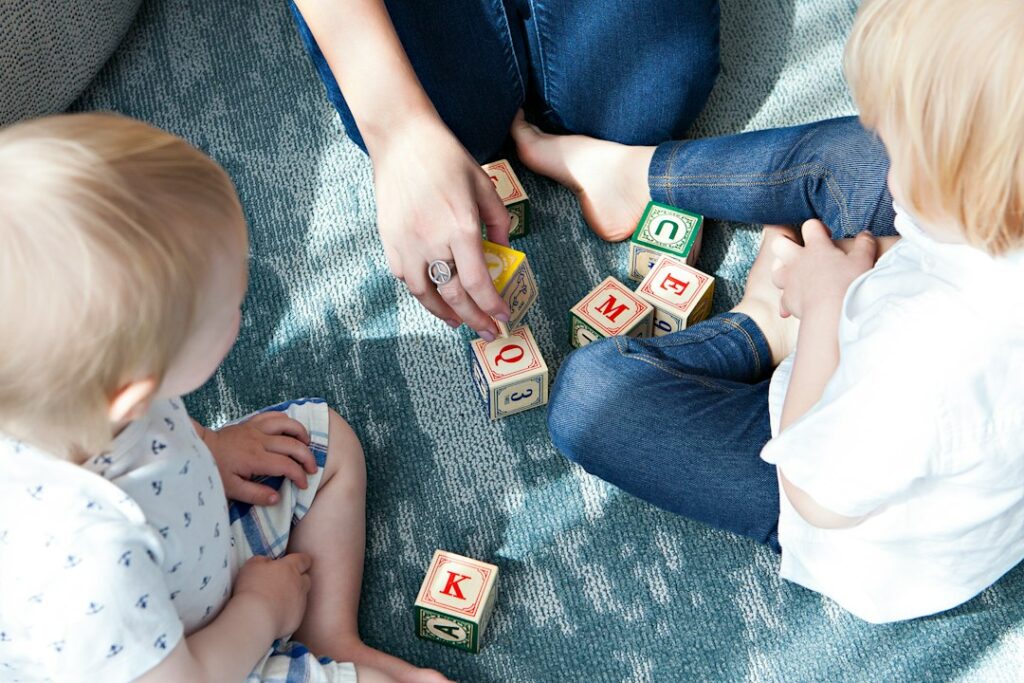
- Child-led, such as building with blocks, pretending to cook, or creating a story with figures
- Guided by an adult, such as sorting objects by size or investigating what sinks in water
- Structured, such as a movement game with clear rules
- Open-ended, such as drawing, constructing, or playing with loose materials without one correct result
Effective play-based learning is not simply unplanned free time. It combines children’s interests with opportunities to practice developmental skills.
How does play support child development?
Play supports several areas of development at the same time. A child building a bridge with blocks may be using fine-motor control, early engineering concepts, spatial reasoning, communication, and persistence in one activity.
Cognitive development
Children learn to compare, predict, remember, organize, and solve problems during play. They may test how many blocks a tower can hold, decide which puzzle piece fits, or change a plan after a structure falls.
These experiences build early foundations for mathematics and scientific thinking. The learning is often more meaningful because the child is trying to accomplish a goal that matters to them.
Language and communication
Pretend play creates many opportunities for children to use language. A child may explain the rules of a game, take on a character, describe an event, or negotiate with another child.
Adults can strengthen this learning by adding words without taking over the activity. For example, while a child plays with vehicles, an adult might use terms such as “behind,” “faster,” “heavy,” “empty,” or “destination.” Open questions such as “What could happen next?” encourage children to explain their thinking.
Social and emotional growth
Play helps children practice cooperation, turn-taking, flexibility, and emotional expression. During dramatic play, children often explore experiences that may be difficult to discuss directly. A child may pretend to comfort a doll, visit a doctor, prepare for school, or solve a disagreement between characters.
Games with simple rules also teach children how to manage disappointment and wait for a turn. These skills develop gradually. Young children still need adult support when conflicts become intense or when a game is too difficult for their developmental level.
Physical development
Active play strengthens balance, coordination, body awareness, and large-muscle control. Running, climbing, dancing, carrying objects, and throwing or catching all contribute to physical development.
Quiet activities support small-muscle skills. Drawing, stringing large beads, using play dough, turning pages, and constructing with small building materials help children develop hand strength and coordination needed for dressing, feeding, and later writing tasks.
Why is pretend play especially valuable?
Pretend play allows children to use symbols. A cardboard box can become a bus, a blanket can become a tent, and a wooden block can represent food. This ability to use one object to stand for another supports imagination, flexible thinking, and early literacy.
Children also practice planning during pretend play. They may decide who will play each role, gather materials, create a setting, and develop a sequence of events. Adults can participate as invited while allowing children to remain in charge of the storyline.
A useful adult response is to follow the child’s lead. Instead of correcting the pretend scenario, an adult might say, “Tell me about this restaurant,” or “What does the patient need?” This keeps the conversation connected to the child’s ideas.
Does play-based learning prepare children for school?
Yes. Play-based learning can support many abilities children use in school, including listening, following directions, expressing ideas, working with others, managing materials, and staying engaged with a task.
This does not mean every activity must resemble a classroom lesson. A child who plans a pretend grocery store is practicing categorizing, counting, writing marks, social communication, and organization. A child who makes a roadway is exploring shapes, direction, cause and effect, and problem-solving.
School readiness also includes confidence and curiosity. Children who are allowed to investigate, make reasonable mistakes, and try again develop a stronger foundation for approaching new tasks.
How can families encourage learning through play at home?
Families do not need expensive equipment or a large playroom. Many useful activities rely on ordinary household materials and time for uninterrupted exploration.
Try offering:
- Cardboard boxes, paper tubes, fabric pieces, and containers for construction or pretend play
- Household objects for sorting by color, size, shape, or purpose
- Books that invite children to predict, point, describe, or retell
- Play dough, crayons, washable paint, and paper for creative work
- Water play with cups and spoons during warm weather, with close supervision
- Movement games such as follow-the-leader, animal walks, or indoor obstacle courses
- Cooking tasks that involve measuring, stirring, counting, and describing changes

In Amherst, seasonal weather can shape play opportunities. Outdoor play may include collecting leaves, observing puddles, watching birds, or comparing how the ground changes after rain and snow. During colder or wet periods, children can continue investigating indoors with light, shadows, textures, sound, and simple building challenges.
How much should adults direct play?
Adults provide the most helpful support when they balance participation with independence. Too much direction can turn play into a series of instructions, while too little support may leave a child frustrated or unsure how to continue.
Adults can:
- Observe before stepping in
- Follow the child’s interests
- Offer a small number of materials rather than overwhelming choices
- Ask questions that invite thinking
- Model cooperation and respectful communication
- Add a challenge when the child is ready
- Allow children to make safe mistakes
There is no need to ask questions constantly. Quiet observation is also valuable. Children often develop deeper concentration when they have time to explore without interruption.
What are common misconceptions about play-based learning?
A common misconception is that play is less educational than worksheets or memorization. In reality, play can involve complex thinking, especially when children are planning, explaining, revising, and cooperating.
Another misconception is that learning must produce a finished product. A building that falls down or a drawing without a recognizable subject may still represent valuable practice. The process often matters more than the final result.
Play also should not be confused with unlimited screen use. Digital activities can sometimes support creativity or problem-solving, but young children benefit from hands-on movement, conversation, sensory exploration, and direct interaction with people and materials.
When might a child need additional support?
Children develop at different rates, but persistent difficulty with communication, movement, social interaction, attention, or everyday tasks may deserve discussion with a pediatrician or qualified early childhood professional. Families can keep notes about what they observe and bring specific examples to a conversation.
Seeking guidance is not a judgment about parenting or a child’s abilities. Early support can help families understand a child’s needs and identify appropriate strategies.
Play-based learning works best when children have time, safety, responsive adults, and materials that match their interests and abilities. Everyday play—building, pretending, moving, creating, and talking—can provide a strong foundation for lifelong learning.